
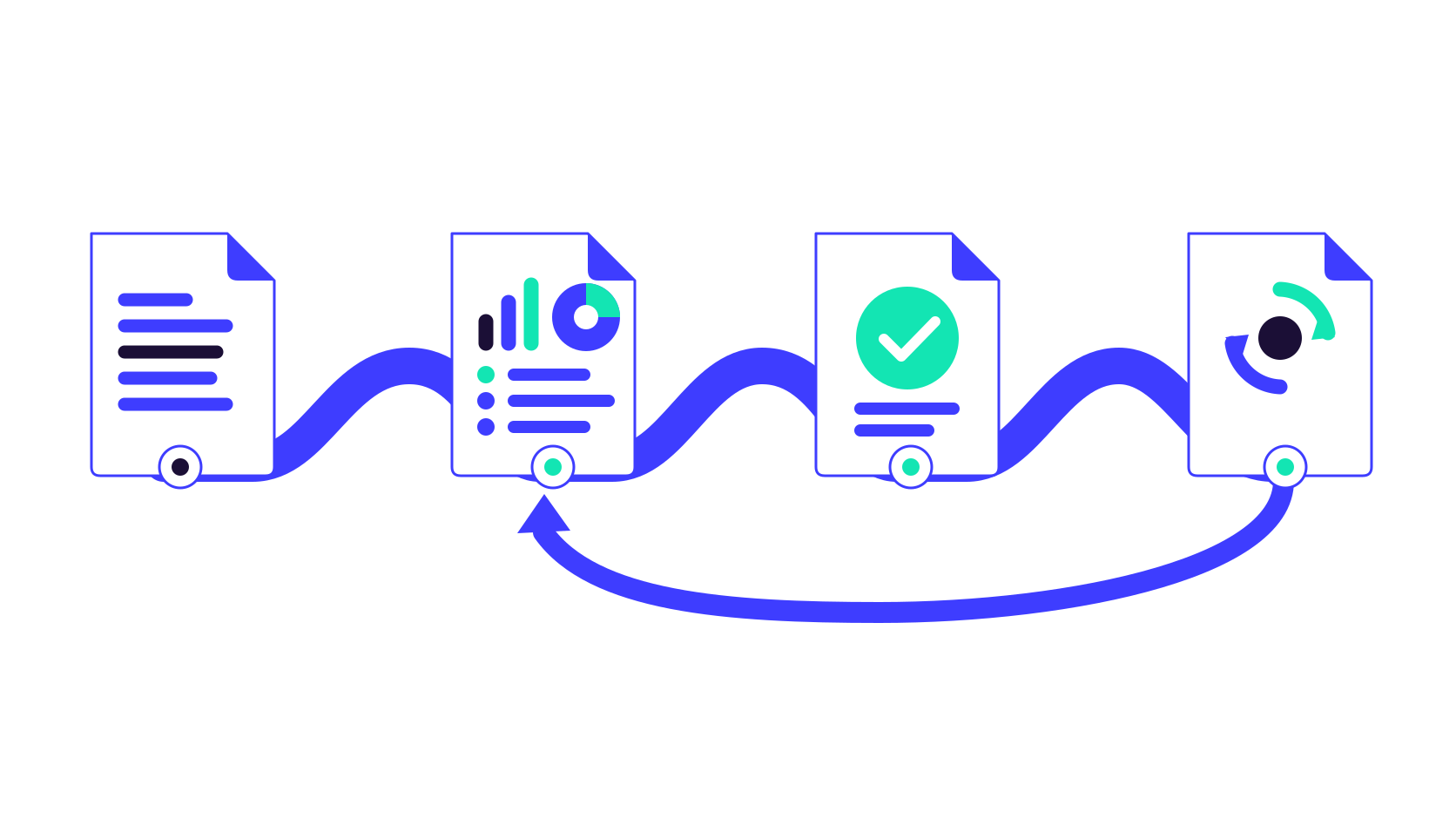
An end-to-end commercial lending platform connects borrower intake, underwriting, credit decisioning, and ongoing monitoring in one credit workflow. It helps lenders carry information forward as a request moves between teams, apply their own review and approval processes, and revisit the credit relationship after approval. It should also connect with the core, servicing, or operations systems that handle work outside the credit process.
That definition gives lenders a more useful way to evaluate a platform than counting features. The question is whether the information collected at one stage helps the next team do its work—and whether the process remains connected when a borrower returns for a review or a new request.
What Does “End-to-End” Mean in Commercial Lending?
A commercial credit request may begin with a relationship manager, a borrower portal, a lender’s website, or an integrated CRM. It then moves through information collection, verification, analysis, decisioning, and approval. Once a loan is active, the lender may need updated documents, financial information, and a new credit review.
An end-to-end platform brings these activities into a connected process. Borrower information, supporting documents, analysis, requirements, and decisions should be available to the people responsible for the next step, subject to the lender’s permissions and workflows. Teams should not have to reconstruct the request each time it changes hands.
“End-to-end” does not mean that one platform must perform every function in a lender’s technology stack. A commercial credit platform can manage origination, underwriting, decisioning, and reviews while passing approved requests to a separate core, servicing, or operations system.
Origination: Capture the Borrower and the Request
Origination is where the lender begins building a usable credit file. A commercial loan origination system should capture more than an application form. It should help teams collect the right information for the requested product, identify what is missing, communicate with the borrower, and prepare the request for underwriting.
Depending on the lender’s process, a request may start internally, through a white-label borrower portal or lender website, or through an integrated CRM. Those entry points should lead into a coordinated workflow so that the lending team can see the borrower’s information, submitted documents, outstanding requirements, and next actions.
The information required will vary. A commercial real estate request may involve property and borrowing-entity details; a C&I request may require financial statements for several related entities; and an asset-based lending request may call for receivables and other collateral information. A configurable intake process allows the lender to reflect those differences without building a disconnected process for every loan type.
What to evaluate: Can the lender configure applications and requirements by product? Can borrowers submit documents securely? Can the team see missing items and move the request into underwriting with its information intact?
Underwriting: Turn Collected Information Into Credit Analysis
Collecting documents is only the start of underwriting. Credit teams need to verify information, analyze the borrower and related parties, review financial performance, and prepare a recommendation. Commercial underwriting software should support that work without hiding the underlying information from the people responsible for reviewing it.
Depending on the loan, the analysis may draw on financial statements, business and personal tax returns, bank account activity, business and identity checks, or collateral information. For applicable lending products, it may also include A/R and A/P aging analysis. The platform should help organize these sources and make them available within the credit workflow.
Automation can reduce repeated data entry and help turn documents into structured information. It does not remove the need to check the results. If a financial statement conflicts with another document, or extracted information appears incomplete, the underwriter needs a way to examine the source and resolve the issue before relying on it. The same principle applies when preparing a credit memo: a faster draft is useful only if the team can review and substantiate its analysis.
What to evaluate: Which documents and data sources can the system process? How does an underwriter inspect extracted information and investigate discrepancies? Can the team work with entity-level and consolidated financial information when a borrower’s structure requires it?
Decisioning: Apply the Lender’s Criteria and Approval Process
Once the analysis is ready, the lender needs to determine the appropriate path to a decision. That path will not be identical for every request. A straightforward application may qualify for a rules-based evaluation or pre-approval. A larger or more complex credit may need additional analysis, conditions, and review by several approvers.
A connected credit decisioning workflow should apply the lender’s configured criteria, route work to the right people, and keep the supporting analysis with the request. The lender defines its policies and approval structure. Automation can help evaluate a request against those rules; complex cases can proceed through the lender’s review process.
The transition after approval matters, too. An approved request may need to move to a core, servicing platform, or specialty operations system for the next phase. When evaluating a commercial lending platform, ask what information can be passed to those systems through integrations, APIs, or webhooks, and what work remains with the operations team.
What to evaluate: Can approval paths vary by product, request size, or risk criteria? What information do approvers see? How does an approved request move into the lender’s existing systems?
Monitoring: Keep the Credit Relationship Active
Approval is an important milestone, but the lender’s need for information continues. Borrowers may have recurring document requirements, periodic financial reporting, or scheduled credit reviews. Bank account data may also contribute to ongoing analysis where the lender has a connection and uses it in its process.
Credit monitoring and review tools should help teams manage those obligations and return to the information already gathered about the borrower. If the borrower requests a renewal, amendment, increase, or new loan, that request can move back through underwriting and decisioning with the existing relationship as context.
Ask specifically what a platform means by “monitoring.” Document requests, recurring requirements, bank-data analysis, and credit reviews are different capabilities. A lender should identify which activities its team performs today, which ones it wants to improve, and what the platform actually supports.
What to evaluate: Can teams manage recurring requirements and upcoming reviews? Can they request and analyze updated information? How does a new credit action connect to the borrower’s existing record and prior analysis?
The Handoffs Matter as Much as the Features
Consider an illustrative request for a commercial line of credit. A borrower starts an application and submits financial documents. The underwriting team reviews the statements and bank information, investigates an inconsistency, and prepares its analysis. The request follows the lender’s approval path. After approval, the operations team receives the information it needs in its own system. Later, the credit team requests updated financials for a review or an increase.
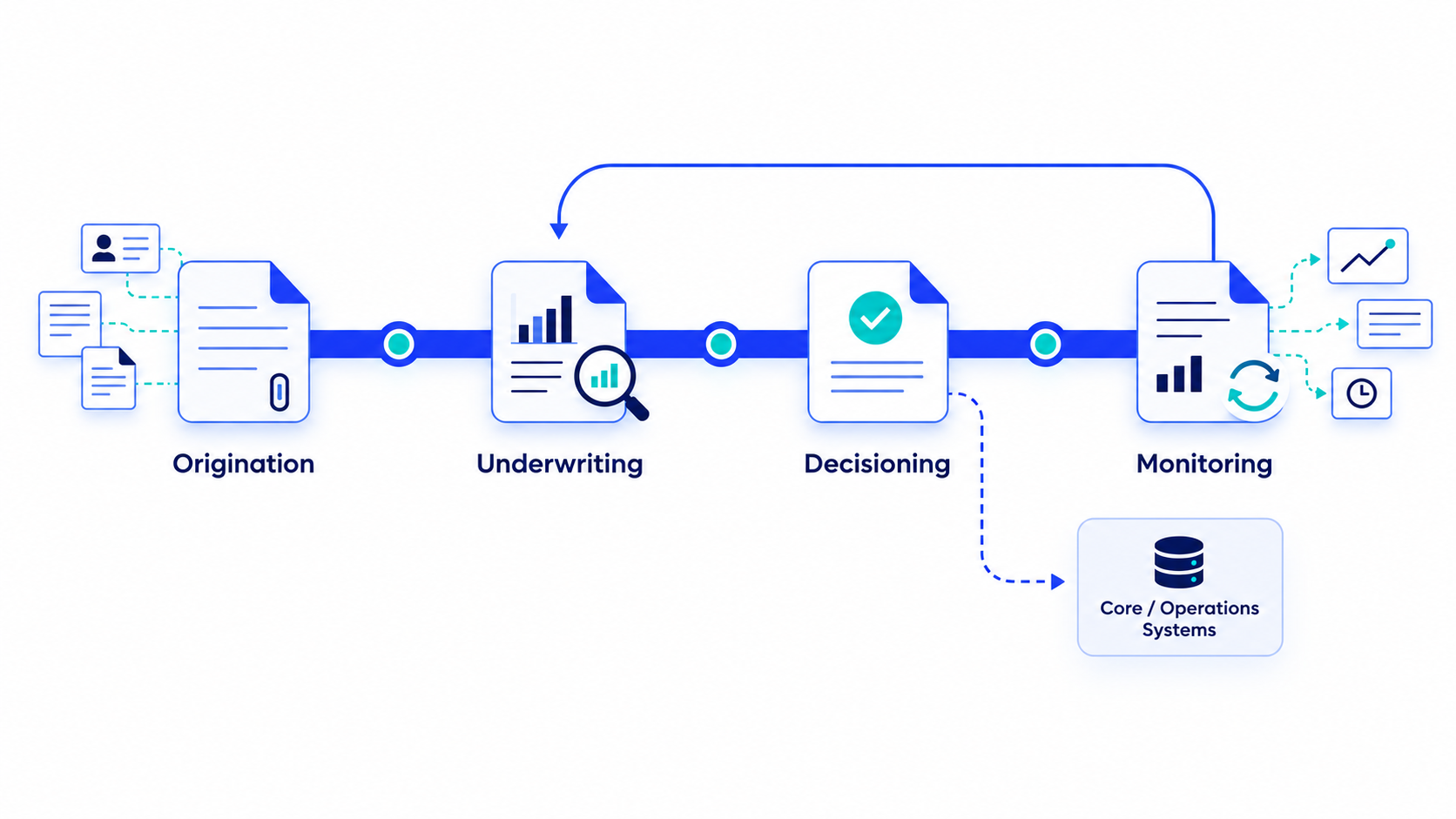
No single feature makes that process end-to-end. The value lies in preserving useful context as responsibility moves from one team to another.
Origination
Borrower and request details, documents, and outstanding requirements move to the underwriting team for evaluation.
Underwriting
Verified information, financial analysis, supporting documents, and credit memo content move to the people responsible for review and approval.
Decisioning
The decision, conditions, and approval information move through the lender’s handoff process to its operations or servicing system.
Monitoring
Existing borrower information, recurring requirements, and updated documents support credit reviews and future requests.
That does not require every system to share one database. It does require the lender to understand where information lives, how it moves, and who is responsible for each handoff.
Questions to Ask When Evaluating a Commercial Lending Platform
Product demonstrations often show what a system can do at a single stage. To understand how it will work across your credit process, ask a vendor to walk through a request from first contact to a later review.
How can a request enter the platform? Include internal intake, borrower-facing applications, lender websites, and CRM integrations relevant to your team.
Can we configure requirements by lending product? Ask how applications, documents, analysis, and workflows differ across the products you offer.
How do underwriters review source information? See how the team checks extracted data, investigates conflicting documents, and records its analysis.
Can decision paths reflect our credit policy? Walk through both a straightforward request and one requiring multiple reviews or approvals.
What moves to our core, servicing, or operations system? Identify the available integrations, the data passed, and any steps the team will still perform.
What happens after approval? Ask to see recurring requirements, document requests, credit reviews, and the start of a renewal or increase.
What will each team see? Confirm that permissions, assignments, and access to borrower information support the way your organization works.
The best demonstration is one based on your own process. Give the vendor a representative request, the documents your team would collect, your approval steps, and the system that receives an approved loan. Then ask them to show how the same borrower comes back for a credit review.
Final Thoughts
An end-to-end commercial lending platform should connect the work before and after a credit decision. It should help a lender capture a request, develop and review the analysis, apply its approval process, hand information to operations, and manage later credit reviews without losing the borrower’s context.
Decipher Credit brings origination, underwriting, decisioning, and monitoring into a configurable commercial credit workflow and connects with the systems lenders use beyond it. To see how those stages could work with your lending process, request a demo of Decipher Credit.